Maharashtra — the land of the great (Maha = Great, Rashtra = Nation) — stands as one of India's most historically significant states. Tucked along the western Deccan Plateau and bordered by the Arabian Sea, this region has witnessed the ebb and flow of some of the subcontinent's most powerful civilizations — from Stone Age cave dwellers and Iron Age settlers to the illustrious Satavahanas, the architectural genius of the Vakatakas, and the military brilliance of the Marathas.
For MPSC aspirants, police recruitment, Talathi exams, or any Maharashtra state-level competitive exam, the Ancient and Medieval History of Maharashtra is a non-negotiable topic. This guide is structured like a classroom session — progressive, layered, and exam-focused. Every concept flows from "why" to "what" to "so what" — exactly the way top educators teach.
Let's begin this journey — era by era, dynasty by dynasty.
Origin & Name of Maharashtra
What Does "Maharashtra" Mean?
The origin of the name "Maharashtra" has been debated among historians and linguists for centuries. The most widely accepted scholarly interpretation is that "Maharashtra" is derived from the word "Rathi", meaning a chariot driver or warrior class — making the land literally "the great land of warriors."
Another school of thought traces the name to "Maharatta" — referring to the great Ratta or Rashtrakuta clan. Some linguists also connect it to "Maharashtri", the Prakrit language that was spoken across the Deccan.
First Historical Mention
- The first recorded mention of Maharashtra appears in 2nd century BCE texts.
- The Chinese Buddhist scholar Huan Tsang (Xuanzang), who visited India in the 7th century CE, mentioned Maharashtra in his travel records — calling it a prosperous and culturally vibrant region.
- The Aihole inscription of Pulakeshin II (7th century CE) uses the term "Maharashtra" explicitly, referring to three "Maharashtra Kutas" governing 99,000 villages.
Exam Tip: The Aihole inscription is a frequently asked MPSC question. Remember — it was inscribed by Pulakeshin II of the Chalukya dynasty in the 7th century CE.
Prehistoric & Early Settlements
Stone Age to Chalcolithic Age
Maharashtra's human history stretches back to the Stone Age, with evidence of early habitation found in rock shelters and ancient settlements across the Deccan.
- Bhimbetka-style rock shelters in the region indicate Palaeolithic human activity.
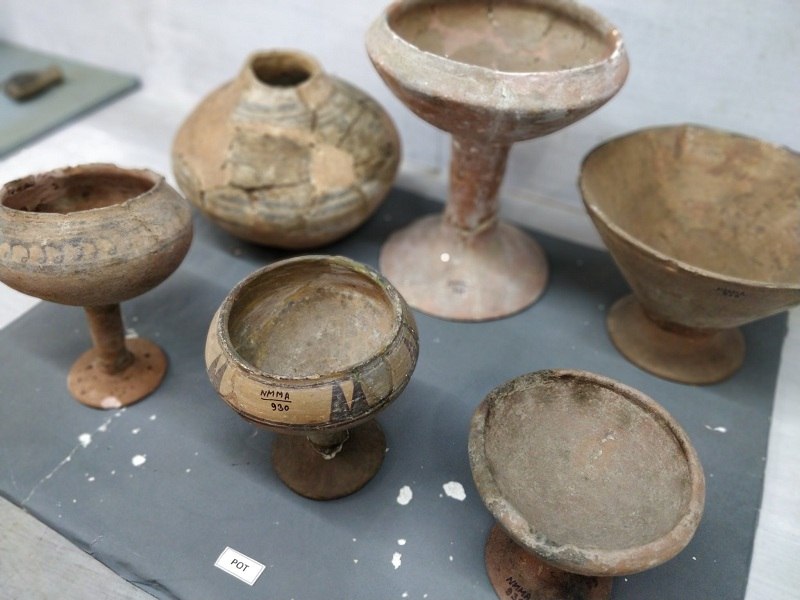
- Jorwe Culture (1300–700 BCE): Chalcolithic sites of the Jorwe culture have been discovered across Maharashtra. This is one of the most significant prehistoric cultures of the Deccan Plateau.
- Settlements showed rectangular house planning, an advanced concept for the period.
- The largest settlement of this culture was found at Daimabad (present-day Ahmednagar district), which also overlapped with parts of Gujarat and northern Maharashtra.
- Dravidian speakers dominated this culture.
- Bronze artifacts of remarkable quality, including chariots, elephants, and buffaloes, were excavated at Daimabad.
Connection to Indus Valley Civilization
The northern regions of Maharashtra, especially around Nashik and the Tapti valley, showed traces of cultural exchange with the Indus Valley Civilization. After the decline of the Indus Valley Civilization (around 1900 BCE), the Deccan gradually came under the influence of independent agrarian settlements that eventually evolved into the historical kingdoms.
Ancient History of Maharashtra
Maharashtra's ancient political history is essentially the story of five great dynastic powers that shaped its culture, language, religion, art, and trade networks.
1. The Mauryan Period (4th–3rd Century BCE)
The Mauryan Empire, under Chandragupta Maurya and later Ashoka the Great, extended its control over Maharashtra in the 4th and 3rd centuries BCE.
- The region was part of the western Deccan territory of the Mauryan administrative system.
- Buddhism flourished under Ashoka's patronage — this laid the foundation for the remarkable Buddhist cave architecture that would follow in Maharashtra (Ajanta, Karla, Bhaja caves).
- Dravidian-speaking communities of the region were brought under the Mauryan administrative fold.
- Trade networks connecting the Deccan to the northern plains expanded during this era.
Key fact: The earliest Buddhist rock-cut caves in Maharashtra date to the Mauryan and post-Mauryan periods.
2. Satavahana Dynasty (230 BCE – 220 CE) — The Golden Age of Ancient Maharashtra
The Satavahana dynasty is undeniably the most important ruling power in the ancient history of Maharashtra. After the decline of Mauryan power (~230 BCE), the Satavahanas emerged as the dominant force and ruled for nearly 400 years.
Key Rulers:
| Ruler | Achievement |
|---|---|
| Simuka | Founder of the Satavahana dynasty |
| Gautamiputra Satakarni | Greatest Satavahana ruler; defeated Scythian rulers (Kshatrapas) |
| Vasishthiputra Pulumayi | Extended the empire; known from coins and inscriptions |
Contributions to Maharashtra:
- Language: The Satavahanas used Prakrit as their official language — a major step in the development of regional languages, eventually giving rise to Marathi.
- Art & Architecture: The famous Ajanta and Ellora cave complexes were initiated during the Satavahana period. These UNESCO World Heritage Sites stand as eternal proof of their cultural genius.
- Economy: Maharashtra became a major trade hub connecting the western coast (Sopara, Kalyan ports) to the interior Deccan. The Roman trade was significantly active during this period.
- Religion: Both Buddhism and Brahmanism coexisted and thrived.

Exam Tip: Gautamiputra Satakarni is often called the "Restorer of Satavahana glory." He defeated the Kshatrapas (Western Satraps) and is mentioned in the famous Nashik Cave inscription.
3. Vakataka Dynasty (250–470 CE) — Patrons of Art & Architecture
Following the decline of the Satavahanas, the Vakataka dynasty rose as one of the most powerful forces in the Deccan. They ruled from approximately 250 to 470 CE and are historically significant for their exceptional contribution to art.
- Capital: The Vakatakas had their center of power in Vidarbha (eastern Maharashtra).
- Coinage: They used Prakrit inscriptions on their coins, continuing the Satavahana tradition.
- Ajanta Caves Phase II: The most celebrated paintings in the Ajanta Caves were created under Vakataka patronage — specifically under King Harishena. Caves 1, 2, 16, and 17 are considered Vakataka masterpieces.
- Alliance with Guptas: The Vakatakas forged matrimonial alliances with the Gupta dynasty, contributing to cultural synthesis across north and south India.
Key Connection: The Gupta-Vakataka alliance meant that the cultural golden age of the Guptas influenced Maharashtra's art, literature, and religion deeply.
4. Gupta Influence on Maharashtra
While the Gupta Empire (4th–6th century CE) was centered in northern India, its cultural, religious, and literary influence permeated Maharashtra through the Vakataka connection.
- Sanskrit literature flourished.
- The concept of Puranic Hinduism — with its emphasis on Vishnu, Shiva, and Shakti worship — spread through Maharashtra during this era.
- Temple construction styles of the Gupta period influenced early Deccan temple architecture.
Classical Period — Chalukyas & Rashtrakutas
Chalukya Dynasty (6th–8th Century CE)
From the 6th century CE, the Chalukya dynasty of Badami (also called Western Chalukyas) emerged as the rulers of Maharashtra and the broader Deccan region.
Two landmark rulers stand out:
-
Pulakeshin II — He famously defeated the North Indian emperor Harsha in approximately 637 CE — a battle recorded by Huan Tsang. This victory established the Deccan's independence from northern political dominance.
-
Vikramaditya II — In the 8th century CE, he defeated Arab invaders who had pushed into the subcontinent after the fall of Sindh. This is a crucial event in Indian history that is often overlooked.
Cultural Legacy:
- The Chalukyas built magnificent cave and structural temples at Badami, Aihole, and Pattadakal — styles that influenced Maharashtra's later temple architecture.
- The Aihole inscription (634 CE) by Pulakeshin II is the first epigraphic use of the word "Maharashtra."
- Court languages were Kannada and Sanskrit.

Rashtrakuta Dynasty (753–982 CE)
The Rashtrakutas overthrew the Chalukyas in 753 CE and became one of the most powerful dynasties in early medieval India.
- Arab traveller Sulaiman (9th century) famously called the Rashtrakuta king "one of the four great kings of the world" — placing him alongside the rulers of the Abbasid Caliphate, China, and Byzantium.
- Greatest Achievement: Construction of the Kailash Temple at Ellora (Cave 16) — the world's largest monolithic rock-cut structure, carved under Rashtrakuta king Dantidurga and later Krishna I.
- The Rashtrakutas had their capital in present-day Karnataka (Manyakheta) but controlled much of Maharashtra.
- They promoted Jainism and Hinduism alongside Buddhism.
Exam Tip: The Kailash Temple at Ellora is dedicated to Lord Shiva and was built under Rashtrakuta king Krishna I. This is a high-frequency MPSC question.
Yadava Dynasty — Rise of Marathi Identity
Yadavas of Devagiri (12th–14th Century CE)
The Yadava dynasty represents one of the most crucial chapters in Maharashtra's history — the era when Marathi truly emerged as the language of power, literature, and governance.
Key Facts:
- The Yadavas ruled from the Tungabhadra River in the south to the Narmada River in the north — covering the core geographic heartland of present-day Maharashtra.
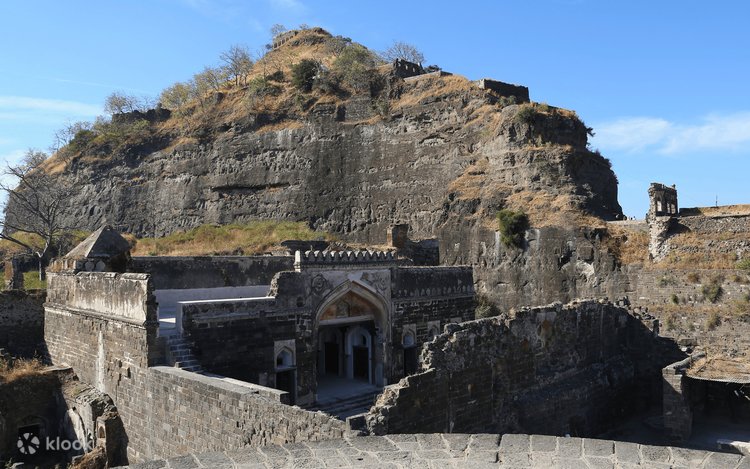
- Capital: Devagiri (present-day Daulatabad, Aurangabad district).
- The dynasty was founded by Dridhaprahara (founder of the Seuna/Yadava line).
- They initially served as feudatories of the Western Chalukyas before achieving independence.
- The name "Seuna" comes from Dridhaprahara's son Seunachandra.
- Early capital: Chandraditya Pura (present-day Nashik).
- Their original territory was Seunadasha — corresponding roughly to the Khandesh region.
Most Important Contribution — Marathi Language:
- The Yadavas were the first dynasty to adopt Marathi as their official court language.
- This marks the birth of Marathi as a language of administration and prestige.
- The growth and origin of Marathi literature is directly traced to the Yadava period.
- Saint-poet Dnyaneshwar (Jnaneshwar) composed the Dnyaneshwari (a commentary on the Bhagavad Gita in Marathi) in 1290 CE under the Yadava period — the foundational text of Marathi literature.
Fall of the Yadavas:
- In 1294 CE, Alauddin Khilji of the Delhi Sultanate attacked Devagiri and plundered the kingdom.
- By the early 14th century, the Yadava kingdom was completely overthrown and Maharashtra came under the control of the Delhi Sultanate.
Exam Tip: Remember the sequence — Yadavas → Delhi Sultanate (Alauddin Khilji) → Bahmani Sultanate. This is a frequently tested historical progression in MPSC exams.
Medieval History — Bahmani & Deccan Sultanates
Bahmani Sultanate (1347–1518 CE)
After the decline of Delhi Sultanate's grip over the Deccan, Hassan Gangu Bahmani established the Bahmani Sultanate in 1347, with its capital at Gulbarga (present-day Karnataka).
Key Features:
- It was a Persian Sunni Islamic Sultanate that imposed the Jizya tax on non-Muslims.
- Despite religious tensions, there was significant Maratha administrative participation:
- Brahmins managed accounts and revenue.
- Marathas held hereditary Patilki rights (village-level revenue collection), preserving local governance structures.
- Many Maratha Watandars served in the Sultanate's administrative machinery.
The Five Deccan Sultanates (After 1518 CE)
When the Bahmani Sultanate fragmented in 1518, Maharashtra was divided among five successor Deccan Sultanates:
| Sultanate | Capital | Region Controlled |
|---|---|---|
| Nizamshah of Ahmednagar | Ahmednagar | North Maharashtra |
| Adilshah of Bijapur | Bijapur | South Maharashtra |
| Qutub Shah of Golconda | Golconda | Eastern Deccan |
| Bidharshah of Bidar | Bidar | Central Deccan |
| Imaad Shah of Elichpur | Elichpur | Berar / Vidarbha |
Memory Trick (Mnemonics): "NAQBI" — Nizam, Adil, Qutub, Bidhar, Imaad — the five Deccan Sultanates that succeeded the Bahmani kingdom.
Rise of the Maratha Power
Seeds of Maratha Dominance (16th Century)
The 16th century saw the gradual emergence of a distinct Maratha political identity within the Deccan — a region fragmented among Muslim Sultanates who were themselves rivals.
Maloji Bhosle — The Pioneer:
- Maloji Bhosle, Shivaji Maharaj's grandfather, served under the Nizamshahi of Ahmednagar.
- The Nizamshahi was centered around Ahmednagar — approximately 95 kilometers from Pune.
- In 1595 CE, Bahadur Nizam II conferred the title of "king" on Maloji, recognizing his valor in opposing the Mughals.
- This was the foundational moment — Maratha control over Pune and surrounding territories began here.
- Maloji Bhosle was given the control of Pune and Supe jagirs, marking the beginning of the Bhosle family's rise to power.
Shahji Bhosle — The Bridge
- Shahji Bhosle, Shivaji's father, continued to serve in the Deccan Sultanates, switching allegiances between Nizamshahi, Adilshahi, and later the Mughals.
- In 1635, Nizam forces attacked Pune, forcing Shahji's submission to Adilshah.
- Dadoji Kondadev was appointed as Shivaji's guardian and manager of the Adilshahi jagir around Pune.
The Reign of Chhatrapati Shivaji Maharaj
Birth & Early Life
- Chhatrapati Shivaji Maharaj was born on February 19, 1630, at Shivneri Fort — located approximately 40 miles (65 km) from Pune in present-day Junnar taluka.
- His mother Jijabai shaped his character, instilling in him ideals of Hindu self-rule (Swarajya) from childhood.
- Dadoji Kondadev trained him in administration and warfare.
- The elegant Lal Mahal in Pune was built for young Shivaji and his mother.
The Making of a Warrior-King
At the age of 16, Shivaji began his mission for Hindavi Swarajya (Hindu self-rule):
- 1647 CE: Captured Torna Fort — his first fort conquest.
- He rapidly secured multiple forts around Pune, consolidating a territorial base.
- 1657 CE: Seized a substantial treasure from Ahmednagar, dramatically expanding Maratha financial and military capacity.
- Through relentless military pressure, he began dismantling Adilshahi control over the Deccan.
Key Battles & Turning Points
| Event | Year | Significance |
|---|---|---|
| Capture of Torna Fort | 1647 | First military conquest; beginning of Swarajya |
| Battle of Pratapgad | 1659 | Defeated Adilshahi general Afzal Khan; major morale boost |
| Surat Plunder | 1664 | First direct challenge to Mughal economic interests |
| Treaty of Purandar | 1665 | Forced treaty with Jai Singh of Mughals; temporary setback |
| Agra Escape | 1666 | Brilliant escape from Aurangzeb's captivity; legendary |
| Coronation at Raigad | 1674 | Formally declared Chhatrapati; established sovereign state |
Coronation and Legacy
- In 1674 CE, Shivaji Maharaj was crowned Chhatrapati (Emperor) at Raigad Fort — establishing a sovereign Maratha kingdom.
- He is also known as the "Father of the Indian Navy" for establishing a powerful naval fleet to defend the Konkan coastline against Siddis and Portuguese.
- His administration was revolutionary:
- Military commanders received salaries, not jagirs — preventing feudal fragmentation.
- The Ashta Pradhan (council of eight ministers) governed efficiently.
- Strong emphasis on protecting temples, women, and civilians — regardless of religion.
Exam Tip: Shivaji's coronation year 1674 at Raigad Fort is one of the most tested dates in all Maharashtra-level competitive exams. Do NOT confuse Raigad (coronation/capital) with Shivneri (birthplace).
Maratha Empire & Peshwa Era
The Maratha Confederacy
After the death of Aurangzeb in 1707, which marked the effective end of Mughal dominance, the Maratha Empire entered its most expansive phase under the Peshwas (Prime Ministers).
The Peshwa Era:
- The Peshwas controlled the empire from Pune (Shaniwar Wada).
- Bajirao I (1720–1740) — the most dynamic Peshwa — expanded the Maratha empire across central India, Rajputana, and even up to Delhi.
- Raghoji Bhosle extended Maratha power into central and eastern India, taking control of the Nagpur kingdom.
- At its peak, the Maratha Empire controlled nearly one-third of the Indian subcontinent.
Decline of the Maratha Empire
- First Anglo-Maratha War (1775–1782): Triggered by British interference in Peshwa succession — the East India Company intervened in 1775.
- Second Anglo-Maratha War (1803–1805): Further British expansion at Maratha expense.
- Third Anglo-Maratha War (1817–1818): Concluded with the defeat of Peshwa Bajirao II in 1818 — effectively ending the Maratha Empire and establishing British supremacy over Maharashtra.
The sequence of Anglo-Maratha Wars and their outcomes is HIGH PRIORITY for MPSC Prelims.
Quick Revision Summary Table
| Period | Dynasty / Power | Key Contribution | Capital |
|---|---|---|---|
| 4th–3rd century BCE | Mauryan Empire | Buddhist expansion; trade networks | Pataliputra |
| 230 BCE – 220 CE | Satavahana | Ajanta Caves; Prakrit language; trade | Pratishthana (Paithan) |
| 250–470 CE | Vakataka | Ajanta Caves Phase II; Gupta alliance | Vidarbha (Nandivardhana) |
| 6th–8th century CE | Chalukya (Badami) | Defeated Harsha; Aihole inscription | Vatapi (Badami) |
| 753–982 CE | Rashtrakuta | Kailash Temple, Ellora | Manyakheta |
| 12th–14th century CE | Yadava of Devagiri | Marathi as court language; Dnyaneshwari | Devagiri (Daulatabad) |
| 1347–1518 CE | Bahmani Sultanate | Deccan Islamic rule; Maratha Patilki survived | Gulbarga |
| 1518–1646 CE | Five Deccan Sultanates | Regional fragmentation; Maratha service | Ahmednagar, Bijapur etc. |
| 1627–1680 CE | Shivaji Maharaj | Maratha Swarajya; Indian Navy; Raigad coronation | Raigad |
| 18th Century | Peshwa Era | Maximum Maratha expansion | Pune |
| 1818 CE | British East India Co. | End of Maratha Empire; Bombay Presidency | Mumbai (Bombay) |
Practice MCQs
Key Terms Glossary
| Term | Meaning |
|---|---|
| Chhatrapati | Sovereign/Emperor — title given to Shivaji in 1674 |
| Patilki | Hereditary village-level revenue collection rights |
| Swarajya | Self-rule or self-governance |
| Watandar | Maratha hereditary rights holders who served local governance |
| Ashta Pradhan | Council of eight ministers in Shivaji's administration |
| Peshwa | Prime Minister of the Maratha Empire |
| Prakrit | Middle Indo-Aryan language used by Satavahanas and Vakatakas |
| Devagiri | Capital of the Yadava dynasty, modern Daulatabad |
| Jizya | Tax imposed on non-Muslims under some Islamic rulers |
The Ancient and Medieval History of Maharashtra is not merely a chronological list of dynasties — it is the story of how a civilization evolved through layers of cultural, linguistic, and political transformation. From the Bronze Age settlements of Daimabad to the global reputation of the Rashtrakutas, from the cave paintings of Ajanta under Satavahana and Vakataka patronage to the birth of Marathi literature under the Yadavas, and from the fierce independence of Chhatrapati Shivaji Maharaj to the strategic empire-building of the Peshwas — every era has left an indelible mark.